Losteria Script Font Evaluation
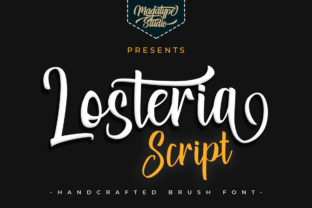
In the expansive landscape of digital typography, selecting the right typeface is often the difference between a design that feels generic and one that resonates with emotion. Among the various options available to designers and hobbyists alike, Losteria Script has emerged as a notable choice for projects requiring a specific aesthetic. This handmade brush font features beautiful flowing characters designed to inject a romantic touch into any crafting project or digital composition.
Before committing to a license or integrating this asset into a workflow, it is essential to understand its technical characteristics, its ideal use cases, and the potential limitations it may present compared to other script fonts. This evaluation aims to provide a balanced perspective on whether Losteria Script aligns with your specific design goals.
Understanding the Design Philosophy
Losteria Script distinguishes itself through its emulation of traditional calligraphy executed with a brush rather than a pen. The core characteristic of this typeface is its organic nature. Unlike rigid geometric sans-serifs or highly structured serif fonts, the strokes in Losteria Script vary in thickness, mimicking the natural pressure applied by a brush against paper. This variation creates a sense of movement and fluidity that is difficult to achieve with standard vector fonts.
The "handmade" aspect of the font refers to the irregularities in the letterforms. These imperfections are not errors but intentional design choices meant to replicate the texture of real ink. When viewed closely, the edges of the letters may show slight roughness or tapering, which adds authenticity. This approach is particularly effective when the goal is to convey warmth, intimacy, or a personal connection to the viewer.
Primary Applications and Use Cases
Given its distinct visual properties, Losteria Script finds its strongest footing in contexts where emotional resonance is paramount. It is rarely used for body text due to legibility constraints; instead, it serves best as a display font. Below are several scenarios where this font proves to be a strong fit:
- Wedding and Event Branding: The romantic quality of the flowing characters makes it an industry standard for wedding invitations, save-the-dates, and ceremony programs. It sets a tone of elegance and tradition immediately.
- Crafting and Scrapbooking: For physical crafters, the font's aesthetic translates well to printed materials, labels, and tags. It complements the handmade nature of crafts like card making, scrapbooking, and custom packaging.
- Branding for Lifestyle Businesses: Small businesses in sectors such as bakeries, boutiques, floral shops, and artisanal goods often utilize Losteria Script to signal a boutique, personalized service model.
- Editorial Accents: In magazine layouts or blog posts, it can be used effectively for pull quotes, section headers, or drop caps to break up dense blocks of text without disrupting the overall hierarchy.
Benefits of Choosing Losteria Script
Selecting a specialized font like Losteria Script offers several tangible benefits for a design project. First and foremost is the immediate establishment of mood. A designer does not need to rely heavily on color or imagery to convey romance or nostalgia; the typography alone carries a significant portion of the narrative weight.
Additionally, the versatility within the script category is a key advantage. While some script fonts are strictly formal or strictly casual, Losteria Script sits in a middle ground that allows for broad application. It is sophisticated enough for high-end branding yet accessible enough for DIY projects. Furthermore, because it is a digital font file, users benefit from the ease of scaling. Whether printing a large banner or embedding a logo on a business card, the vector-based nature ensures crisp output at any size.
Tradeoffs and Practical Considerations
Despite its aesthetic appeal, there are significant tradeoffs to consider before adopting Losteria Script as a primary typeface. The most critical limitation is legibility. Handwritten-style fonts inherently require more cognitive processing for the reader. The connecting strokes between letters, while beautiful, can blur together, especially at small sizes or low resolutions.
Readers should also be aware of compatibility issues. Because this is a display font, pairing it correctly with secondary typefaces is crucial. If paired with another decorative font, the result can appear chaotic and unprofessional. Conversely, if paired with a font that is too stark or modern, the contrast might feel jarring rather than complementary. Typically, a clean sans-serif or a classic serif is required to balance the flourish of Losteria Script.
Another consideration is the file format and licensing. As with many premium fonts, users must verify the specific terms of use. Some licenses restrict the number of devices or prohibit certain types of commercial redistribution. Ensuring compliance is vital for avoiding legal complications, particularly for businesses planning to sell products featuring the font.
Situations Where Alternatives May Be Preferred
While Losteria Script excels in romantic and artistic contexts, it is not the optimal solution for every scenario. There are situations where alternative typefaces would serve the user's needs better:
- High-Volume Text Requirements: If a project involves long paragraphs of reading material, such as a book manuscript or a detailed instruction manual, Losteria Script is unsuitable. In these cases, a highly legible serif or sans-serif font is necessary to ensure readability and reduce eye strain.
- Corporate and Professional Identity: For industries such as finance, law, or technology, a font that conveys stability and neutrality is often preferred. The playful or emotional nature of Losteria Script might undermine the authority required in these sectors.
- Digital Interfaces: On mobile screens or web interfaces where space is limited, complex script fonts can render poorly. Users scrolling through content may find the intricate details of the letters distracting or illegible on smaller displays.
- Global Audiences: If the target audience includes non-native speakers, simpler typefaces are generally more accessible. The stylized nature of script fonts can sometimes obscure letter shapes, making them harder to recognize for those unfamiliar with the language.
Decision-Making Insights for Designers
To determine if Losteria Script aligns with your goals, start by defining the emotional objective of your project. Ask yourself: Does this project require a sense of intimacy and handcrafted charm? If the answer is yes, then this font is likely a strong candidate. However, if the priority is clarity, speed of reading, or corporate neutrality, you should look elsewhere.
It is also advisable to test the font in context before finalizing a decision. Create mockups using both the headline and body text you intend to use. Print a sample at the actual size you plan to use it. Often, a font looks impressive on a screen but loses its definition when printed on textured paper or viewed from a distance. This practical testing phase can reveal potential issues with kerning or stroke weight that are not apparent during initial browsing.
Ultimately, the value of Losteria Script lies in its ability to transform a standard layout into something memorable. By understanding its strengths and respecting its limitations, designers can leverage its romantic character effectively without compromising the functional integrity of their work.